|
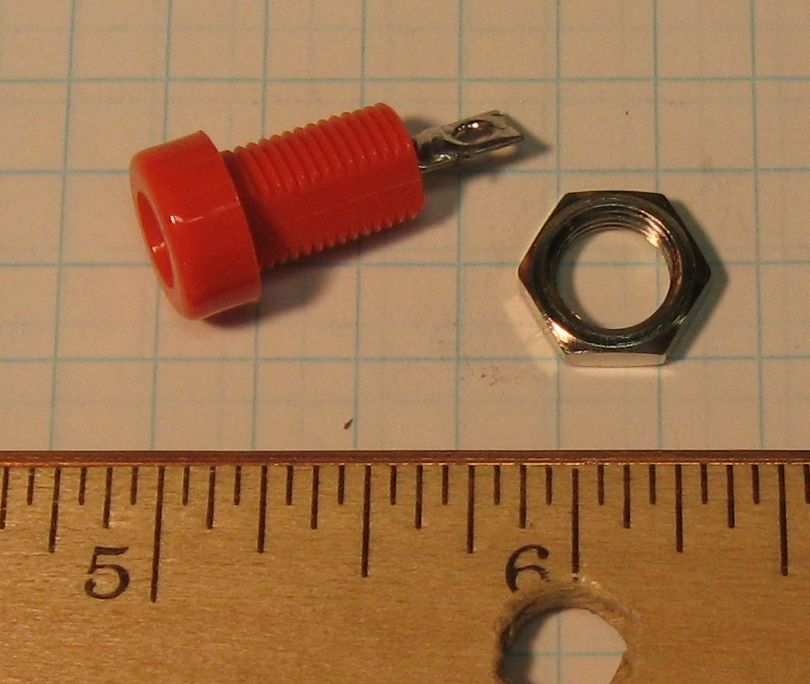
Banana Jack
They come in a variety of colors. You plug a banana plug into a banana jack.
They are used in circuits that share a common ground since they only connect
one wire.
|
|
|
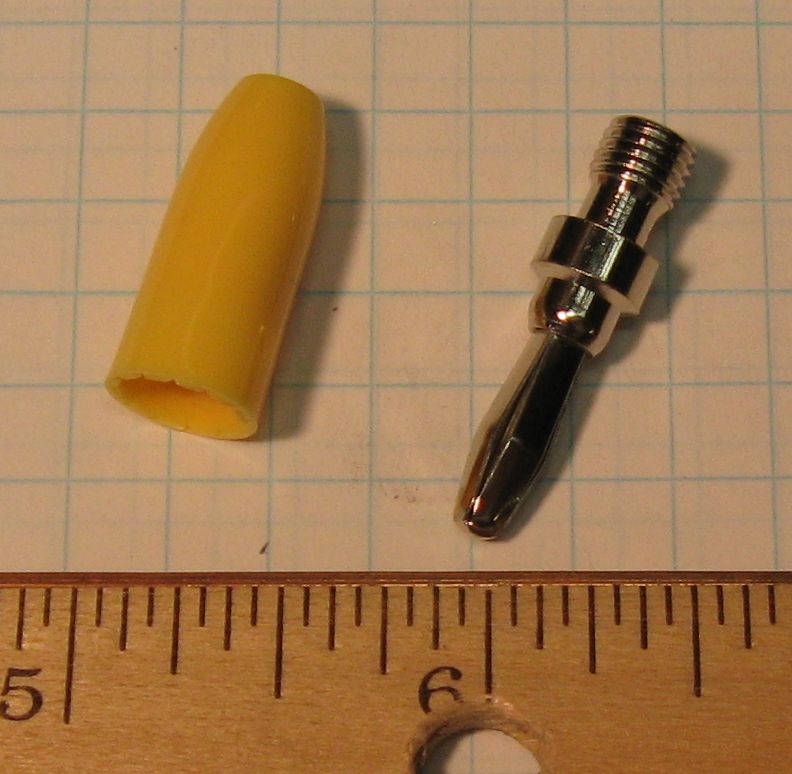
Banana Plug
They come in a variety of colors. You plug a banana plug into a banana jack.
They are used in circuits that share a common ground since they only connect
one wire.
|
|
|
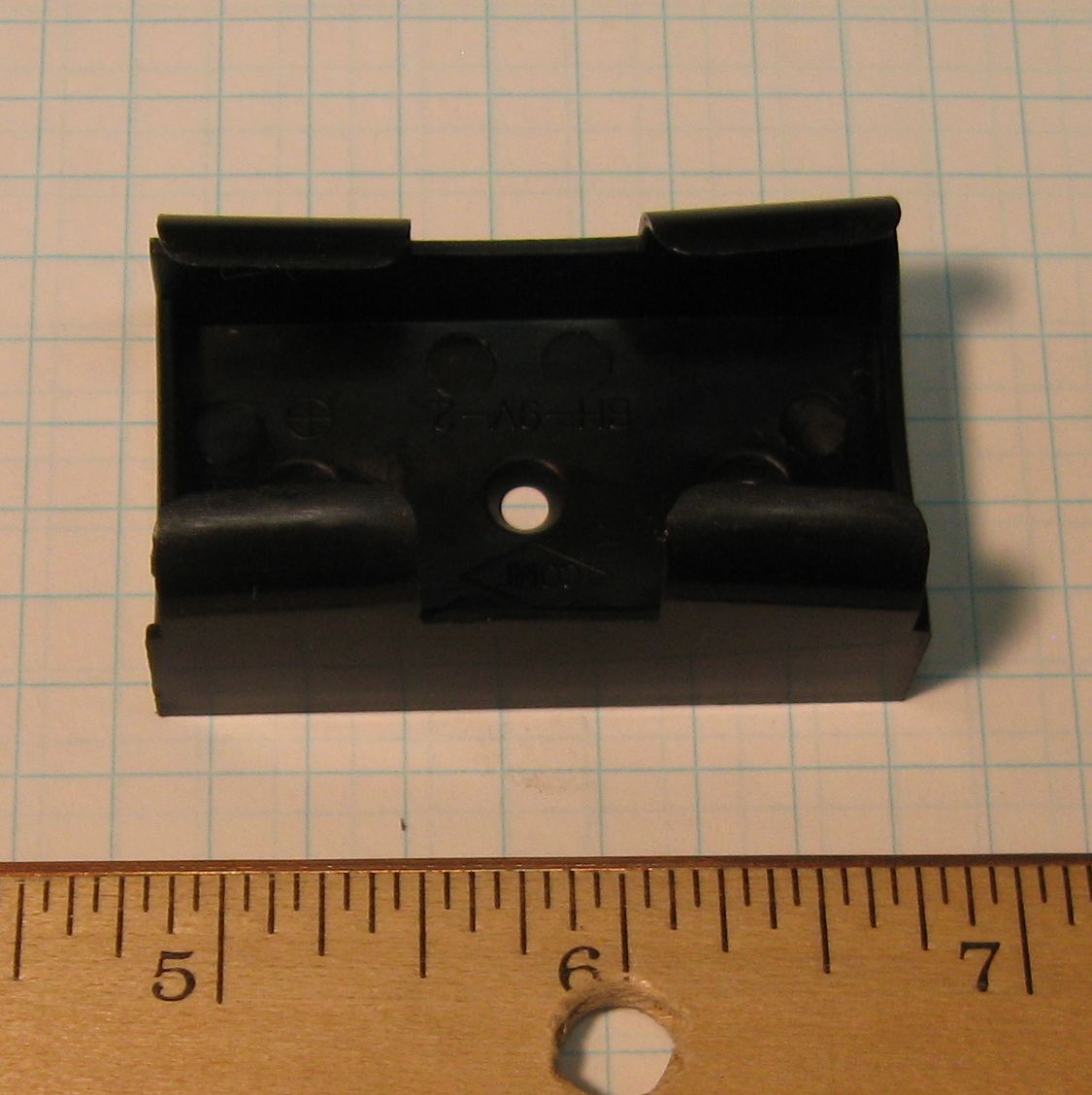
Battery Holder for 9V Battery
Keeps your battery from rolling around your enclosure.
|
|
|
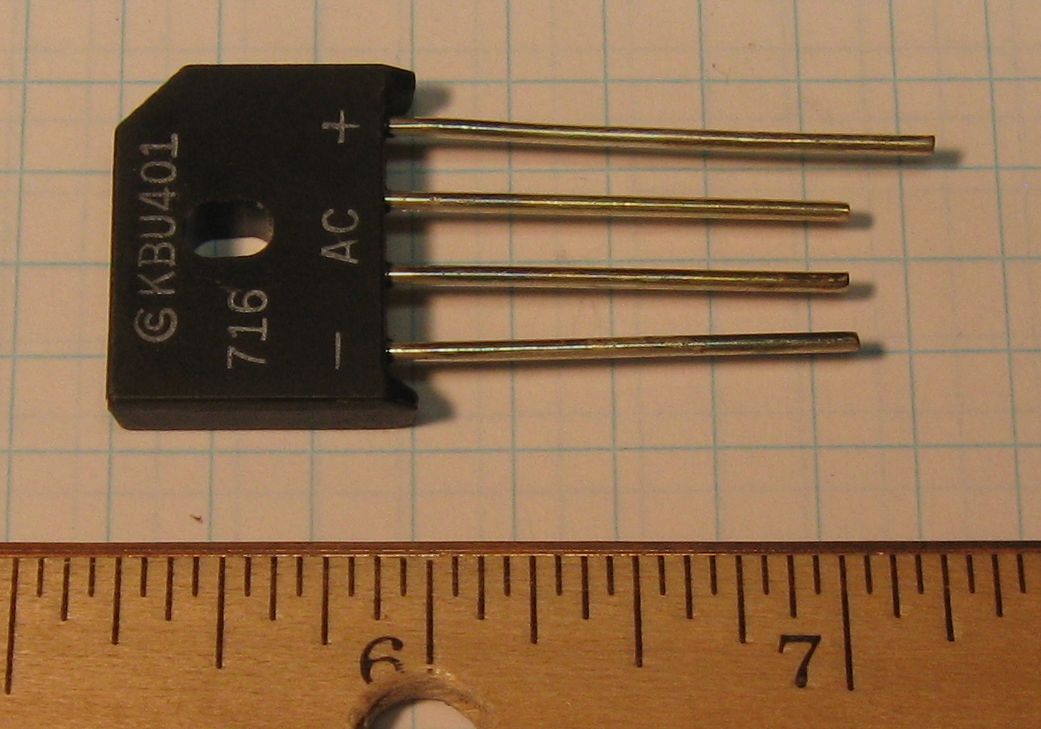
Bridge Rectifier
This package contains four high power diodes arranged in a diode
bridge. It is used for full wave rectification in power supplies.
|
|
|
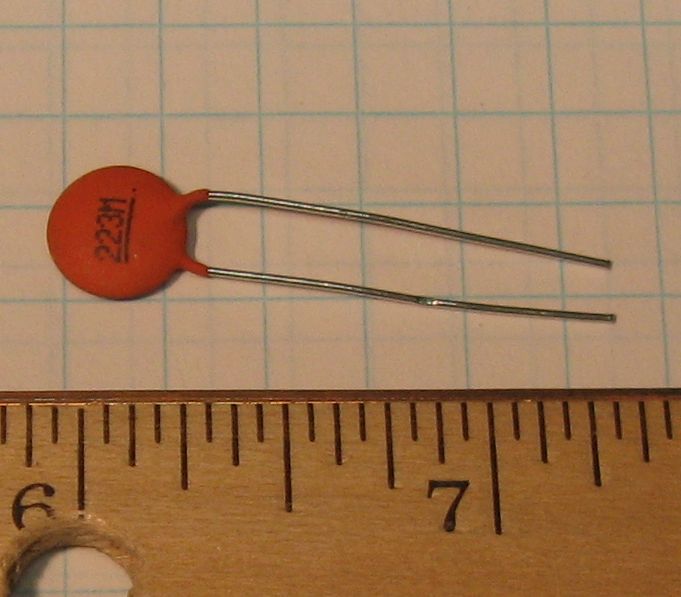
Ceramic Cap
This is a typical ceramic capacitor. Ceramic capacitors are non-polarized so there is no need to put them into the board in a
particular orientation. They come in many many values (from pico-farads to micro-farads) and many voltage ratings
(from 10s of volts to 1000s of volts). They come in many sizes. Typically lead spacing of 0.2" (5mm) works well but you can always bend the
leads of smaller or larger caps to fit the PCB.
For synth work 50V or higher is more than enough.
|
|
|
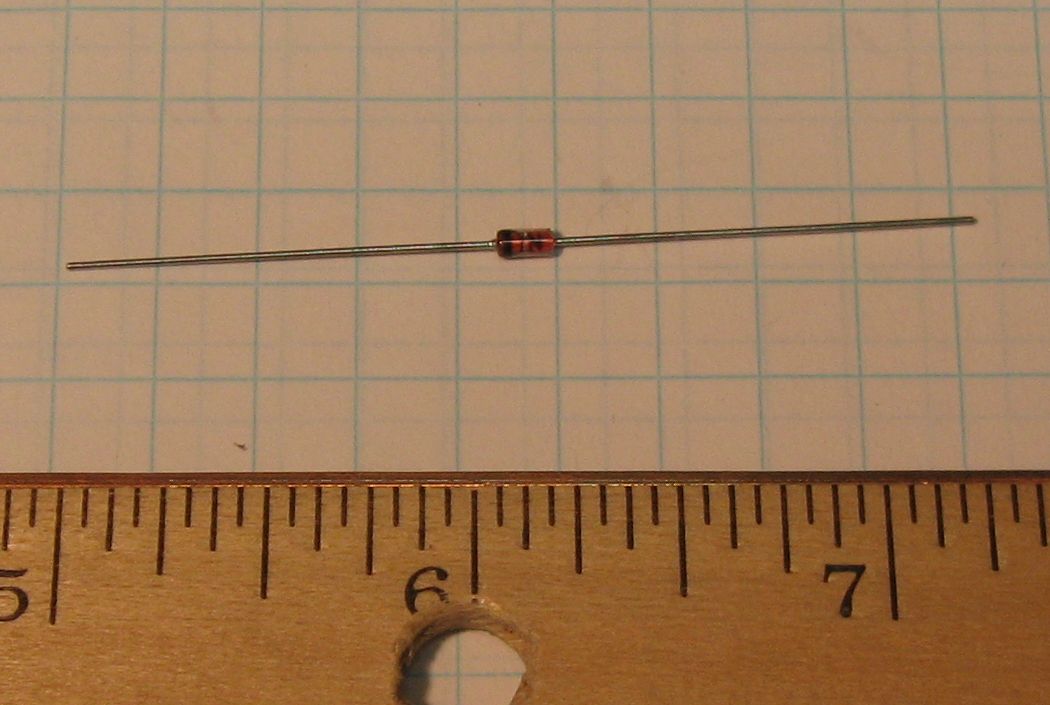
Diode (High Speed) Glass Package
This is a typical high speed diode like the 1N914 or 1N4148. Zener diodes also come in this
form factor. Notice the band at one end. It marks the diode's cathode.
|
|
|
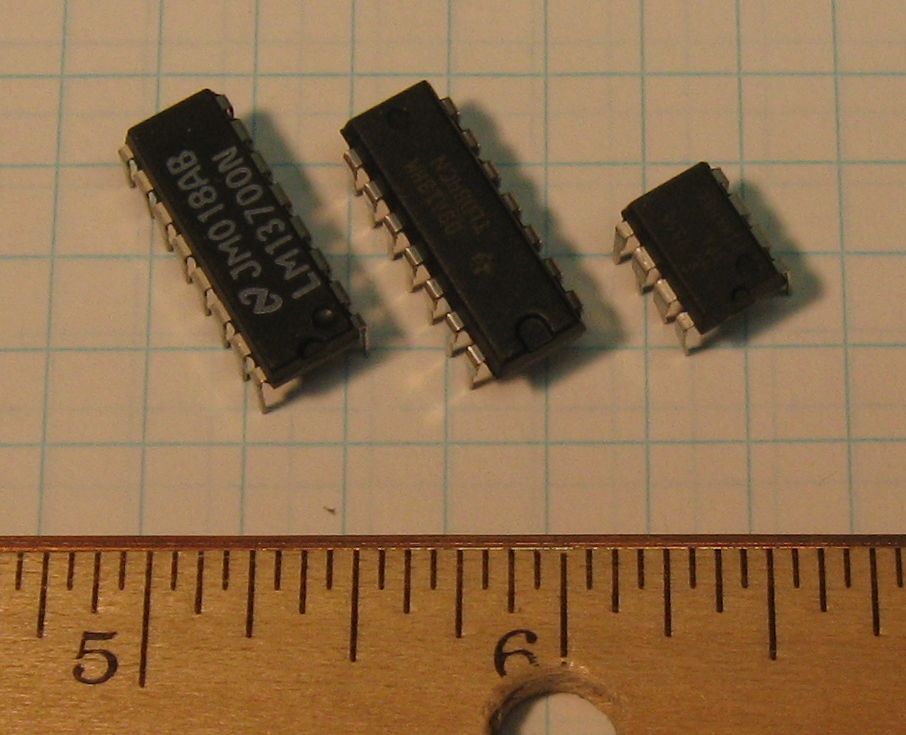
DIP IC Packages
DIP (dual inline package) ICs. These ICs are in plastic DIPs but they also come in ceramic but they look pretty much the same.
DIPs come in from 6 to 80 or more pins.
|
|
|
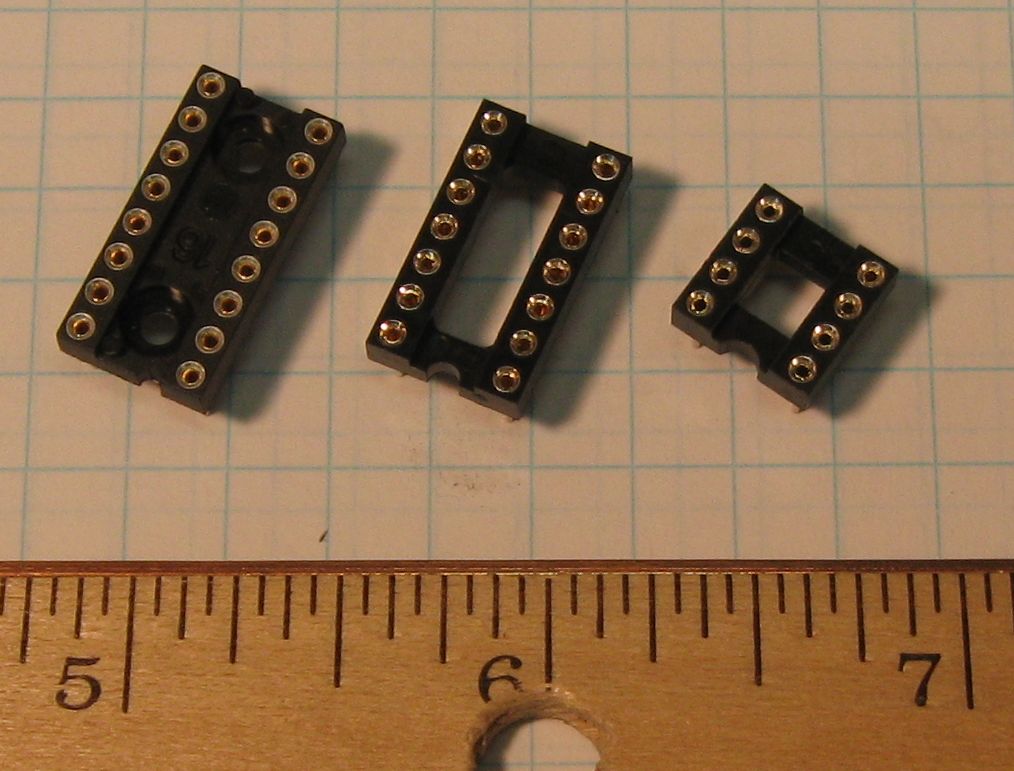
DIP IC Sockets
These are IC sockets with machined pins. They provide a good connection to the pins of the IC. They permit you to
easily replace a bad or suspect IC. These sockets have gold contact fingers.
|
|
|
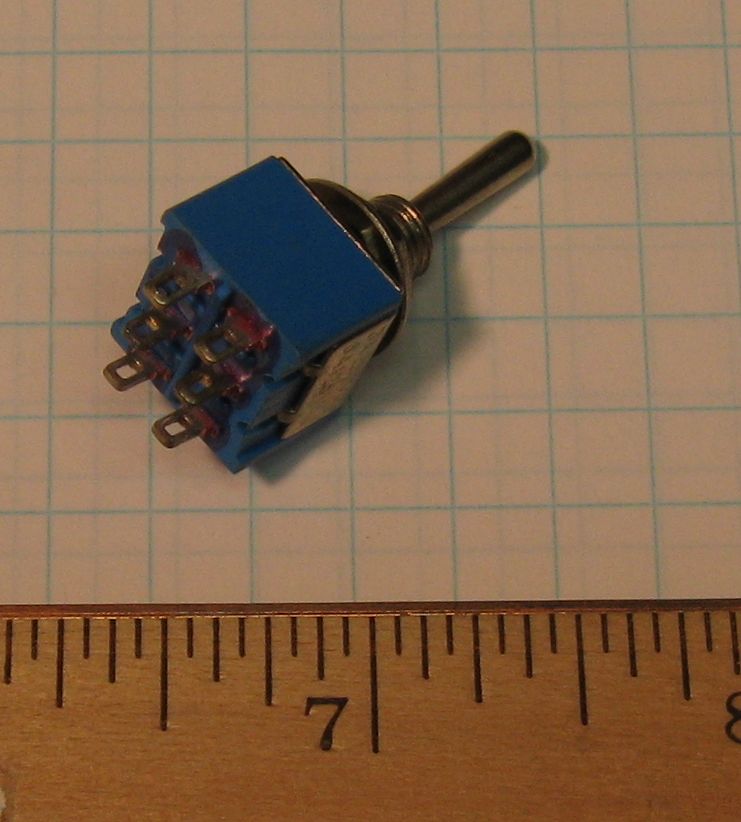
DPDT Switch
This is a double pole double throw switch. It has two independent SPDT switches that are controlled with the
same switch bat.
|
|
|
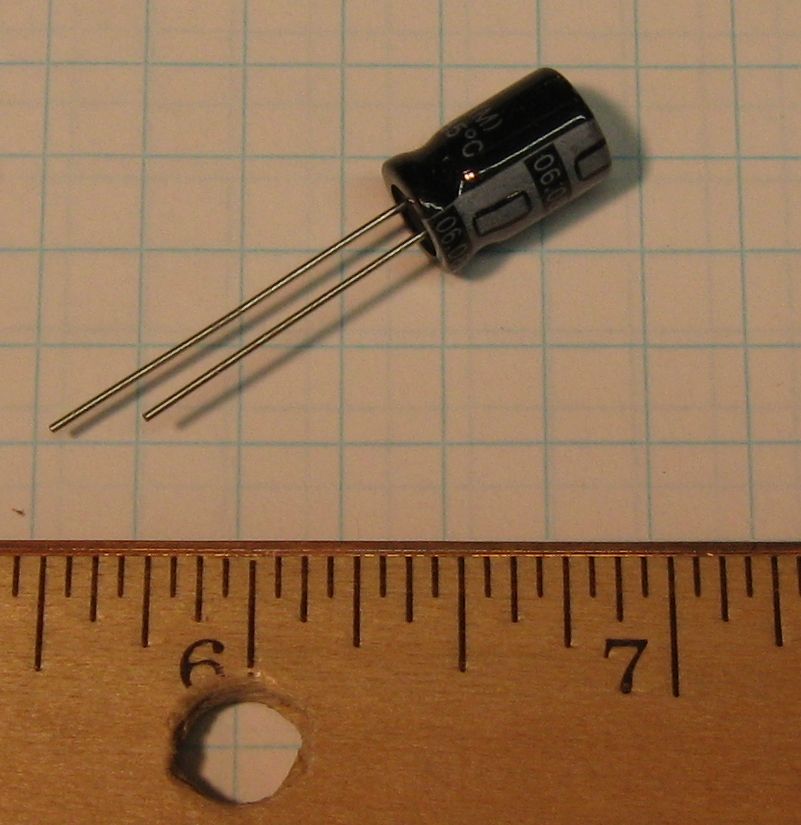
Electrolytic Capacitor (Aluminum)
This is a typical aluminum polarized electrolytic capacitor. This is the radial lead configuration. They also come in axial configuration
(leads coming out of the sides like an axle).
Notice that the negative side is marked. This is because you must
install polarized electrolytic capacitors properly. The negative side must always be at or below the potential of the
other lead. Sometimes the positive terminal is marked. Usually the positive lead is longer than the negative lead (when new).
There are also non-polarized aluminum capacitors. They look pretty much like this too but do not have a polarity indicator. They
come in many colors. They range in value from micro-farads to farads. They have a wide range of voltage ratings. For synth work 25V or more is typical.
|
|
|
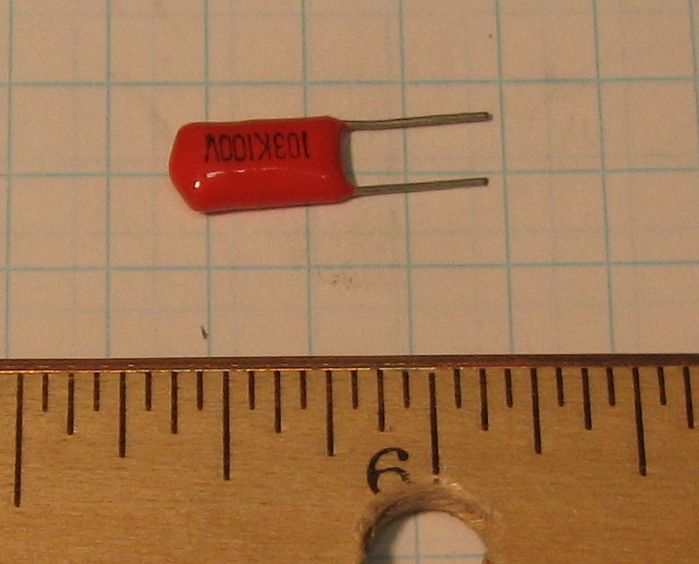
Film Capacitor
This is a typical polyester film capacitor. Film capacitors are non-polarized so there is no need to put them into the board in a
particular orientation. They come in many many values (from pico-farads to micro-farads) and many voltage ratings
(from 10s of volts to 1000s of volts). They come in many sizes and colors. Typically lead spacing of 0.2" (5mm) works well but
you can always bend the leads of smaller or larger caps to fit the PCB. For synth work 50V or higher is more than enough.
|
|
|
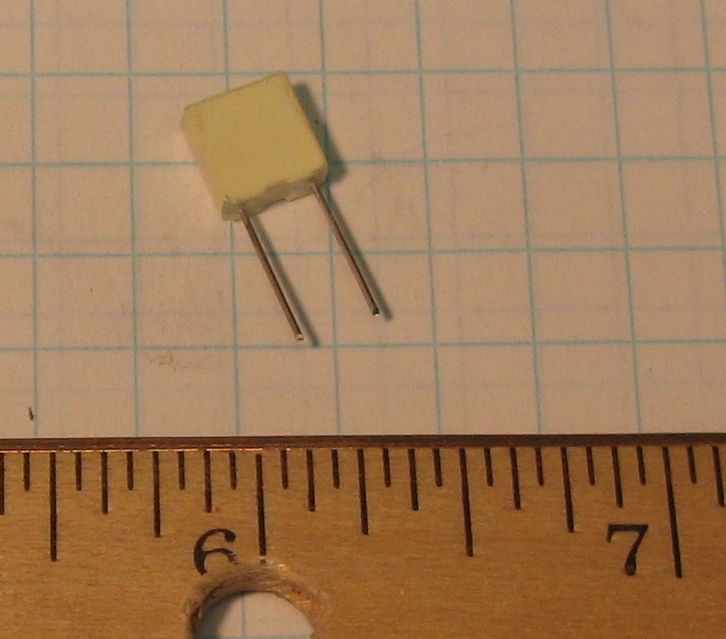
Film Capacitor
Another type of film capacitor to illustrate that they come in different shapes, sizes and colors.
|
|
|
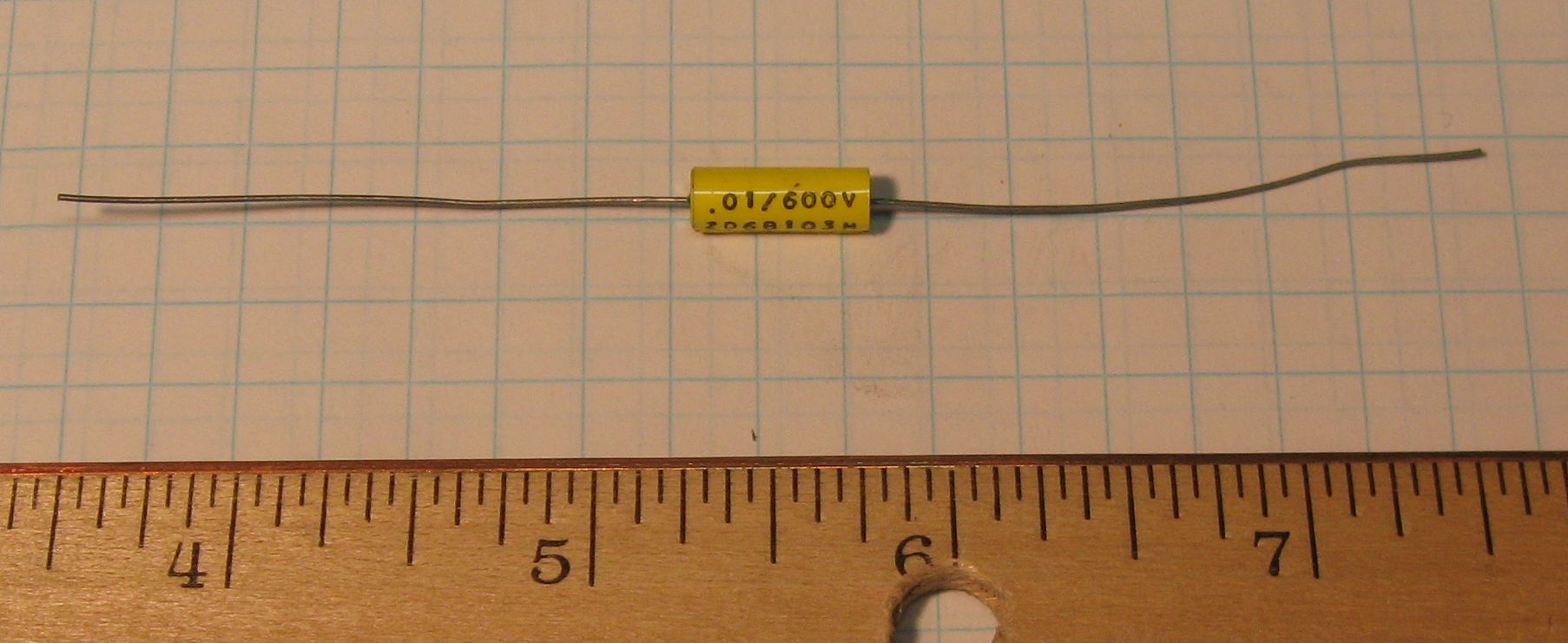
Film Capacitor
Another type of film capacitor to illustrate that they come in different shapes, sizes and colors.
This is an axial lead configuration.
|
|
|
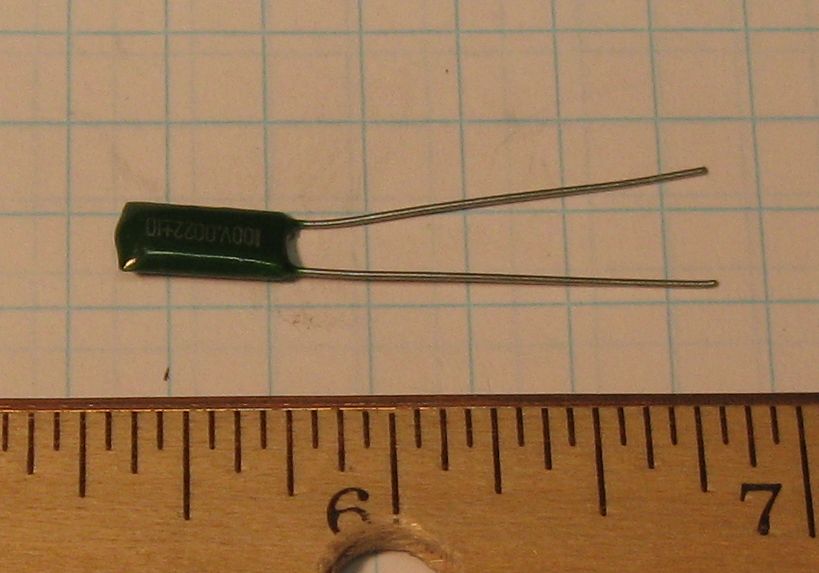
Film Capacitor
Another type of film capacitor to illustrate that they come in different shapes, sizes and colors.
|
|
|
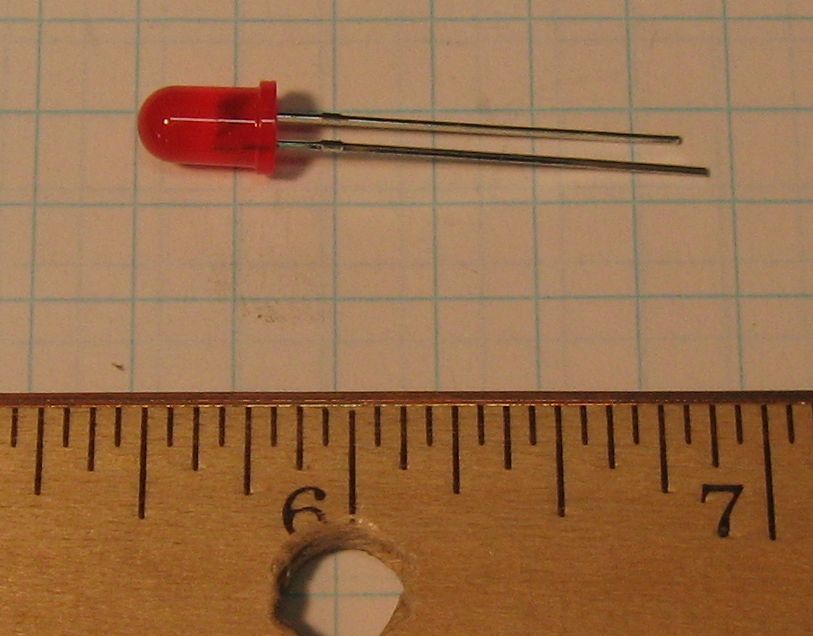
LED General Purpose
LEDs come in a variety of colors (and spectrums) now and in multi-color as well. The longer lead is the anode and the
LED typically has a flattened side to mark the cathode.
|
|
|
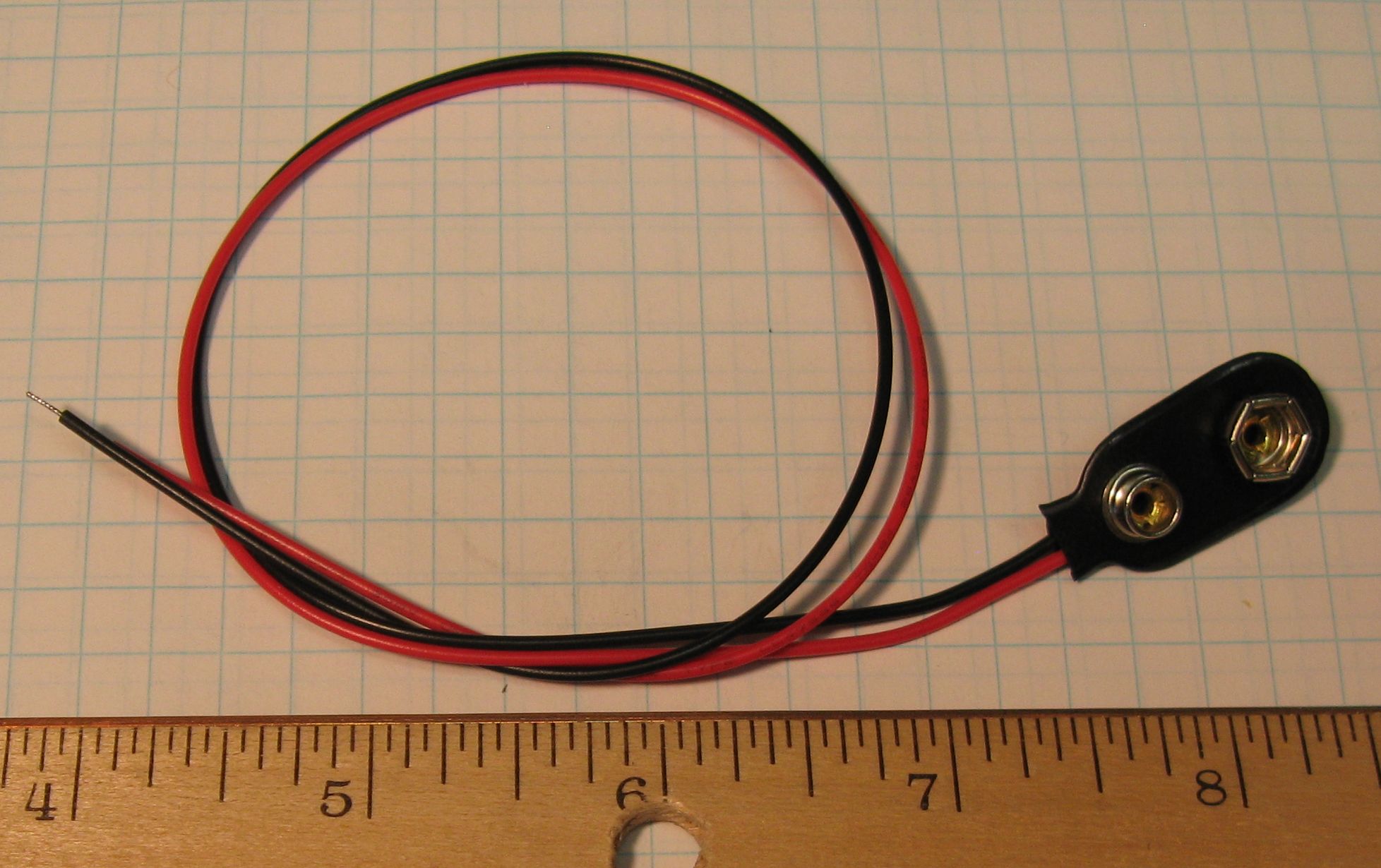
Nine Volt Battery Clip
Used to connect a 9V battery to a circuit.
|
|
|
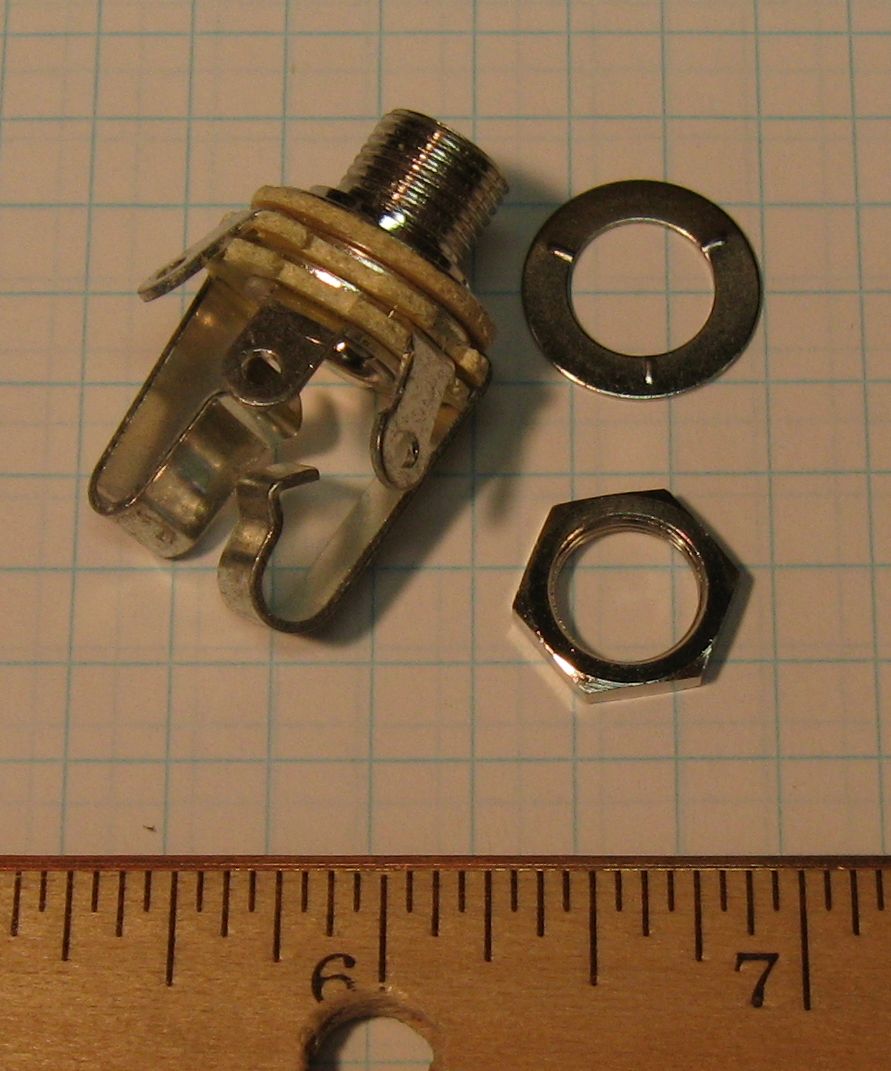
Phone Jack 1/4" Stereo
This is a stereo phone jack (TRS tip-ring-sleeve) which is typically used for headphones. In guitar
foot pedals it can be used to switch the ground to the circuit so that it is only powered when the
guitar cord jack is inserted.
|
|
|
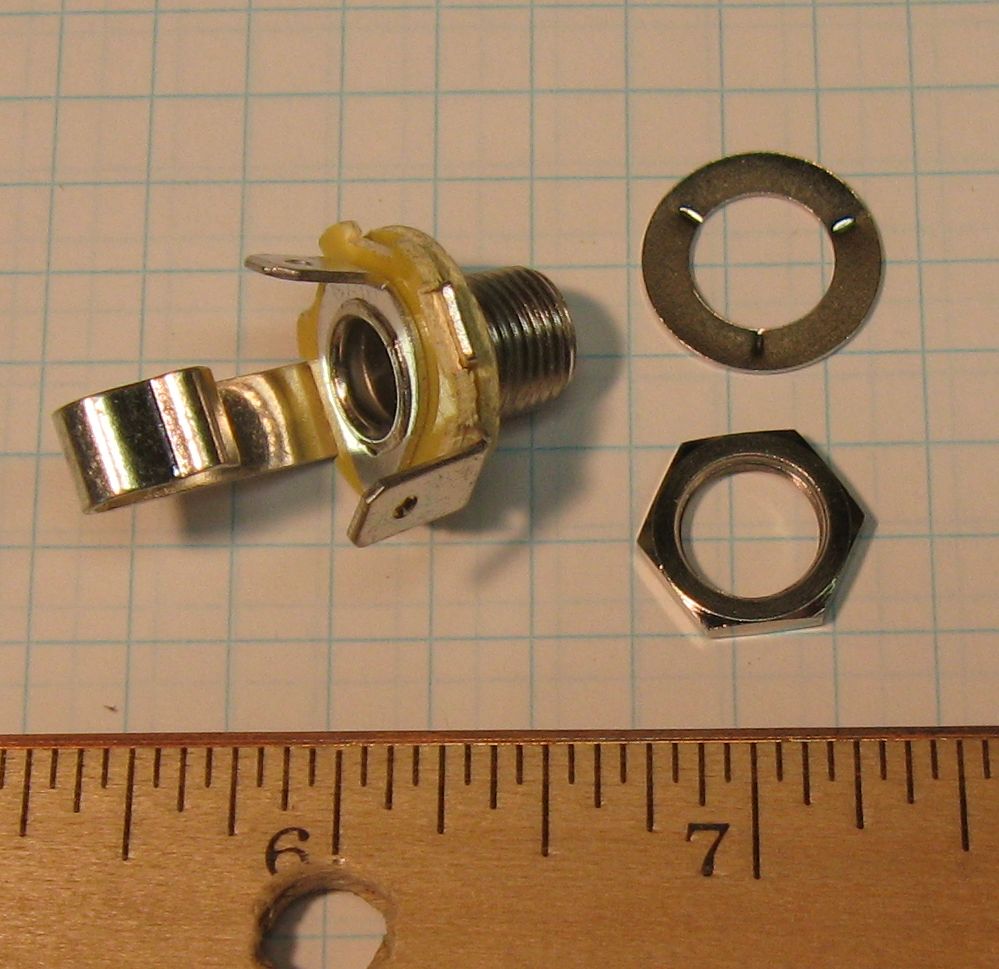
Phone Jack 1/4" Mono
This is a mono phone jack used to permit connection with a phone plug.
|
|
|
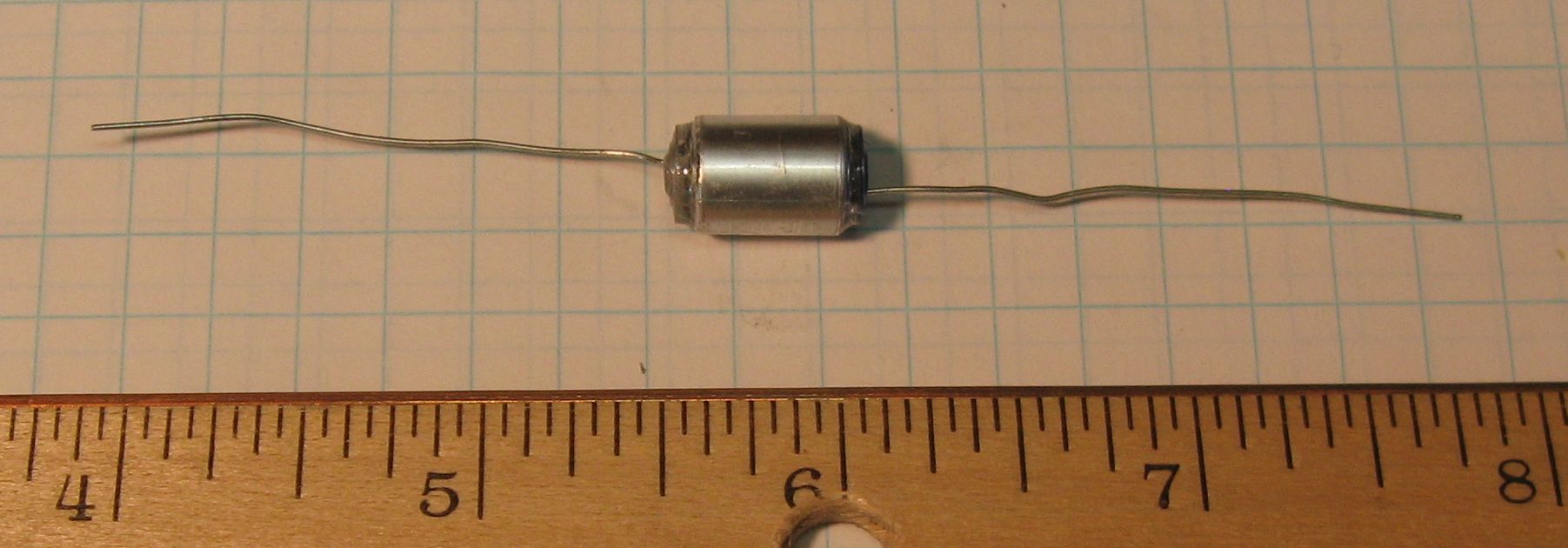
Polystyrene Film Capacitor
Polystyrene caps display good temperature stability and long hold times when used in sample and hold circuits.
They are like film caps (described above).
|
|
|
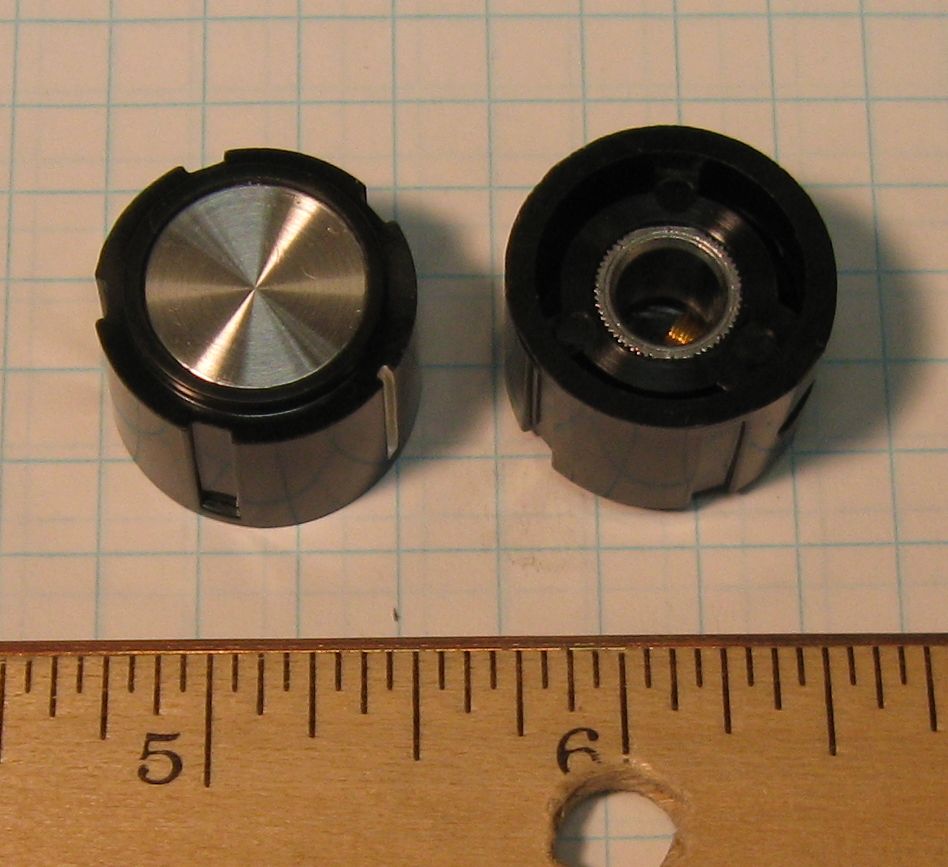
Potentiometer Knob (For 1/4" Shaft)
This is a knob which fits on a 1/4" potentiometer shaft. Since the hole is round it will fit
pots with round or "D" shafts. Knobs come in many forms and colors. They also come in many shaft configurations
including "D", knurled, round, different sizes, etc. Be sure the knobs you buy fit the pots you buy.
|
|
|
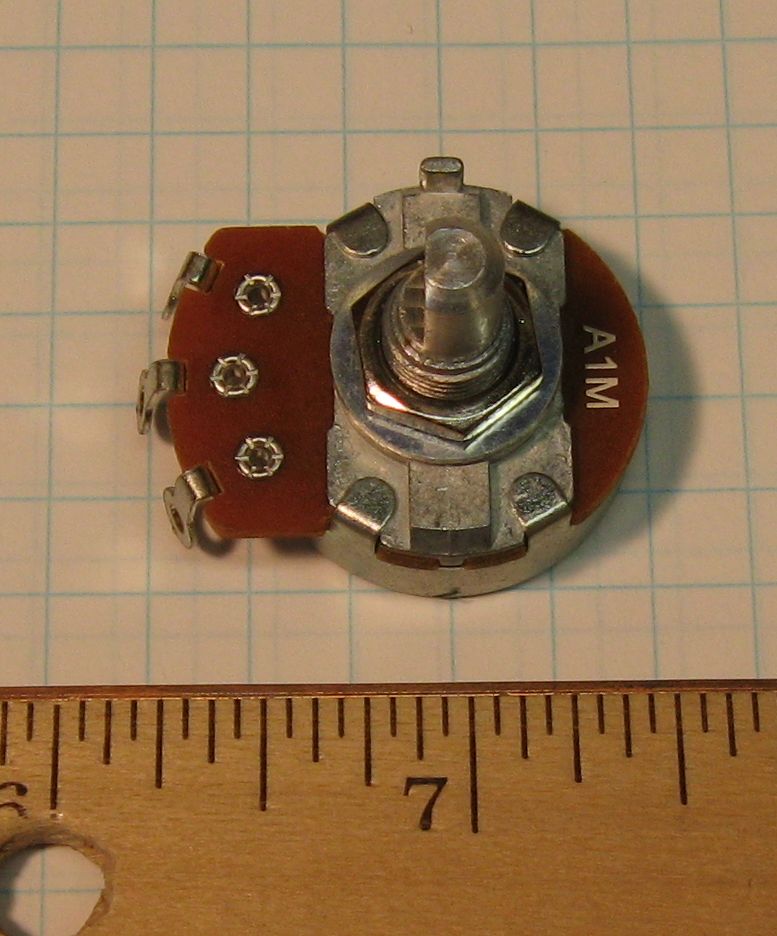
Potentiometer
This is a typical potentiometer. They come in different wattage ratings, tapers, and resistances.
Usually an "A" before the value means "Audio taper". The letter "B" before the value means linear taper.
The two outer terminals connect to the resistive strip of the pot. The center terminal is connected to the "wiper"
which "wipes" along the resistive strip when you turn the shaft thus permitting the resistance between the terminals
to be varied.
|
|
|
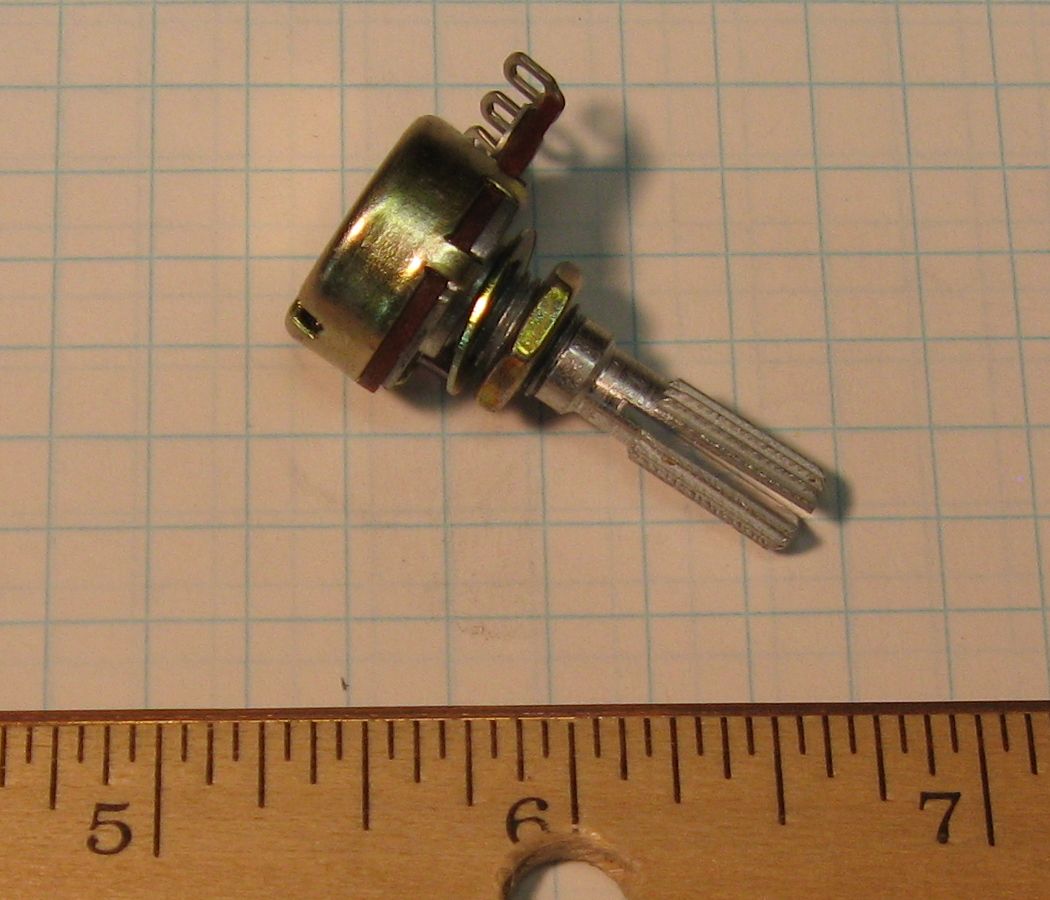
Potentiometer (Small body)
Another typical size of potentiometer.
|
|
|
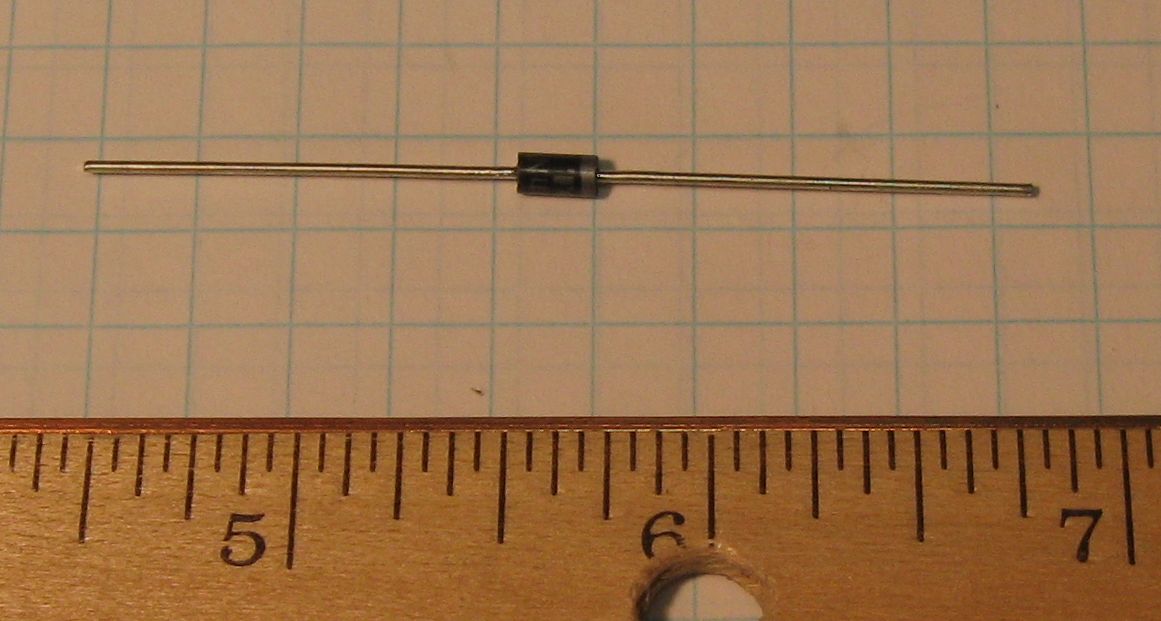
Power Diode
This is a diode that is used where higher power and lower frequency and not speed is the major consideration.
Higher power diodes have greater junction capacitance and are not suited for logic switching circuits like
high speed diodes are. You can make a bridge rectifer out of diodes like this or use the integrated version
shown above. These are typically used in power supplies or spike suppression across coils.
|
|
|
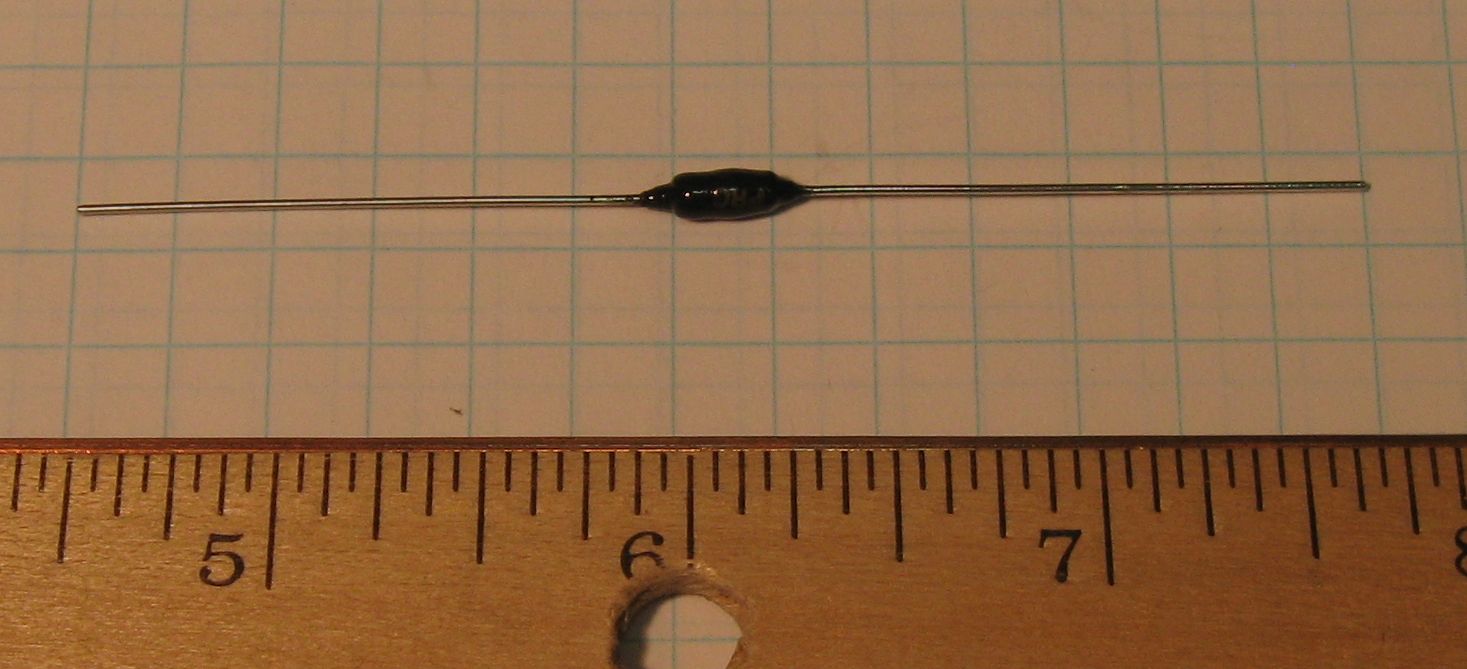
PT094 Tempco
This is a PT094 2K Ohm .1W +/-1% T.C. +3500 PPM Wire Wound Axial Compensator. It is used in
very specific situations to compensate for temperature changes in log convertors.
|
|
|
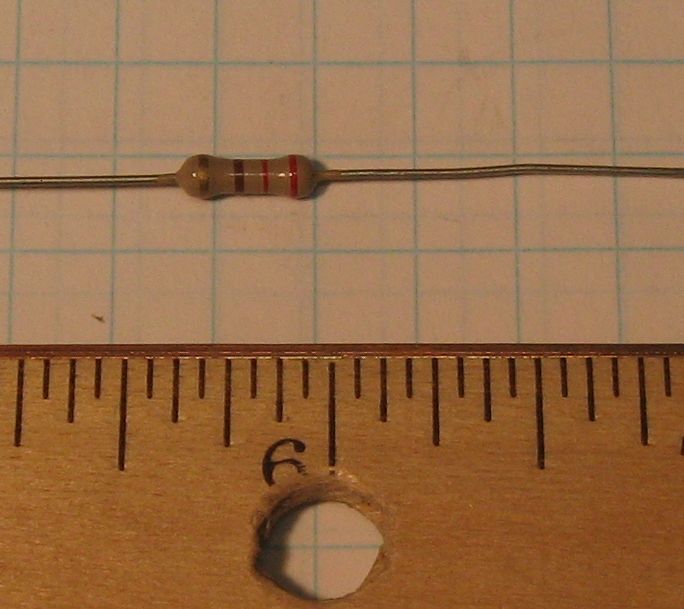
Resistor 1/2 watt 5%
Typical 1/2 watt resistor. They come in values from ohms to meg-ohms. The resistor should not be
put into a circuit where it dissipates more than 1/2 watt of power. You will notice that as the
power rating of a resistor goes up so does it's size. This is because the resistor needs
more surface area to dissipate the heat that comes with high power.
|
|
|
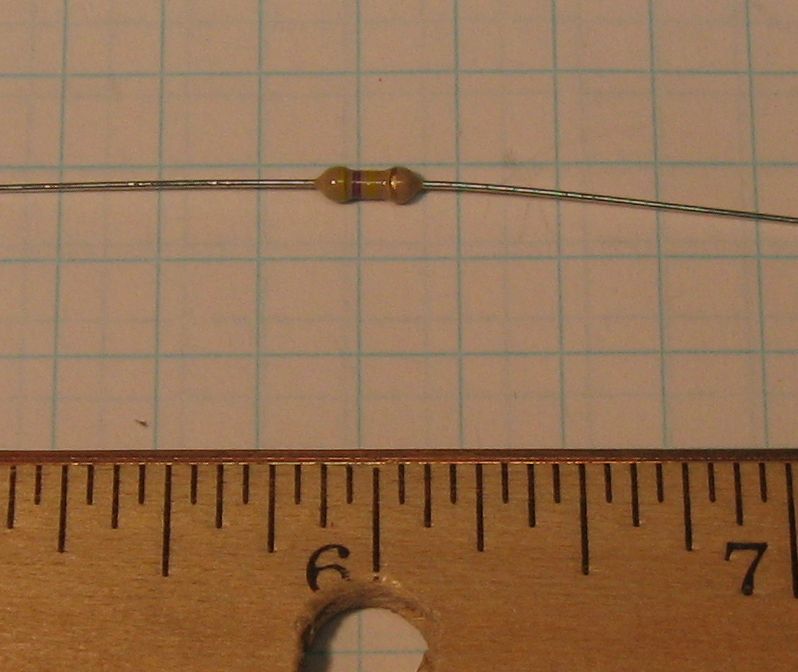
Resistor 1/4 watt 5%
Typical 1/4 watt resistor. They come in values from ohms to meg-ohms. The resistor should not be
put into a circuit where it dissipates more than 1/4 watt of power.
|
|
|
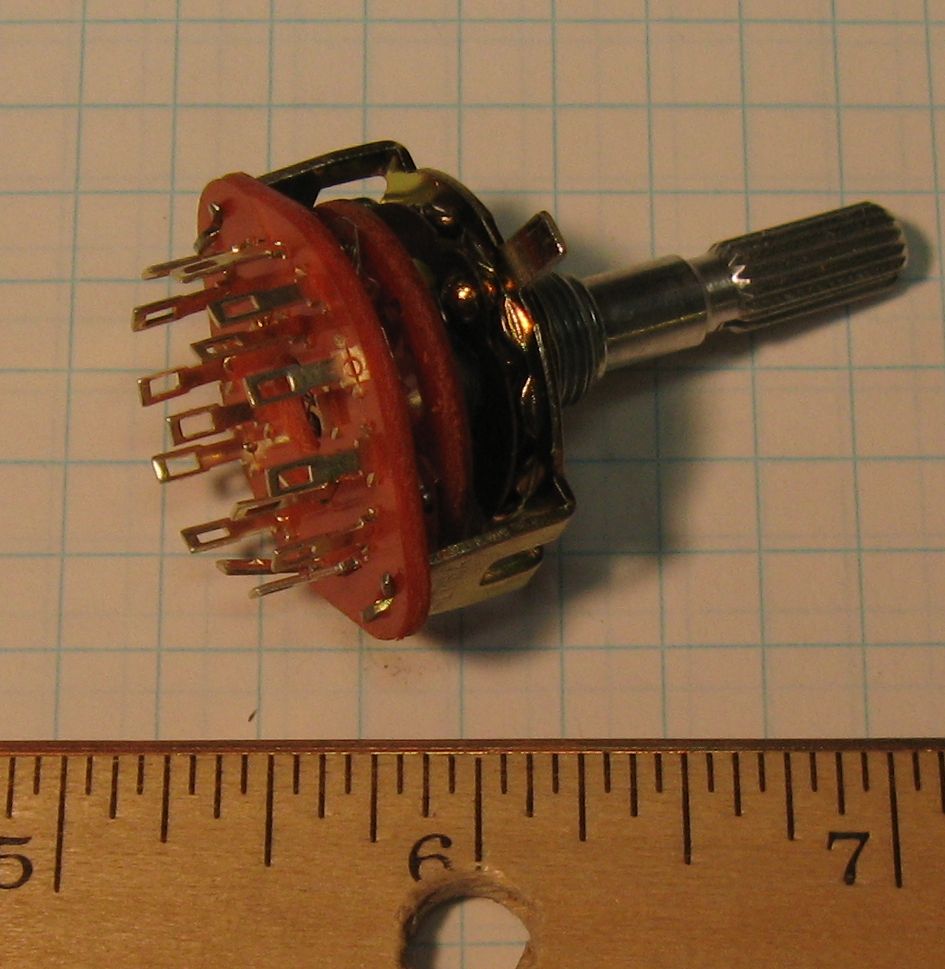
Rotary Switch
description
|
|
|
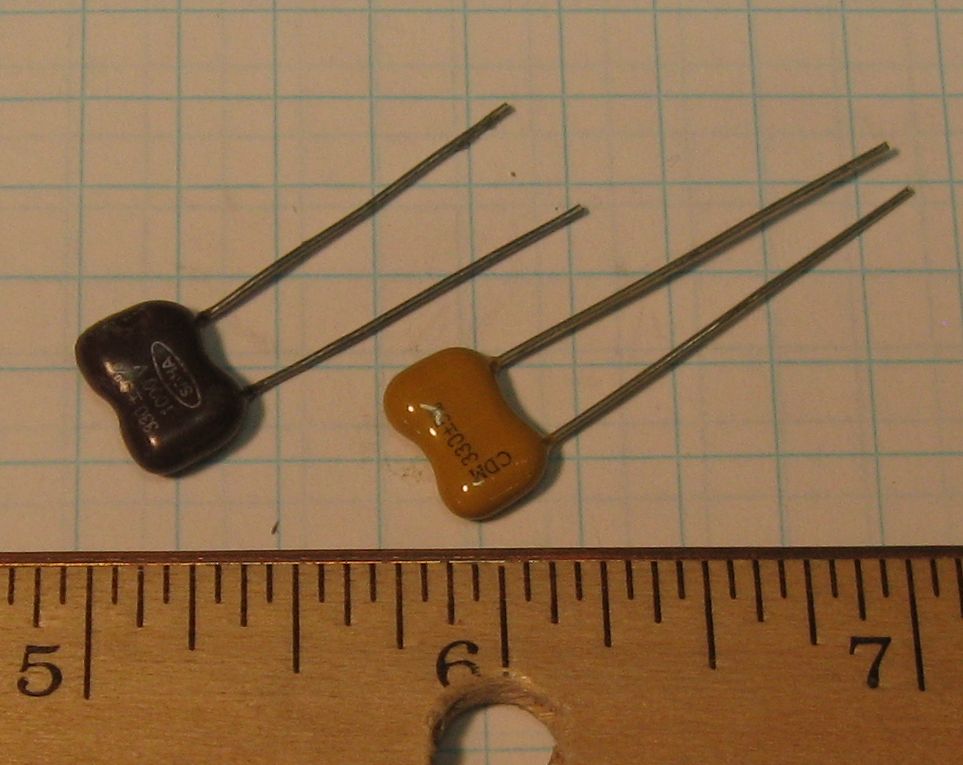
silver mica cap.jpg
description
|
|
|
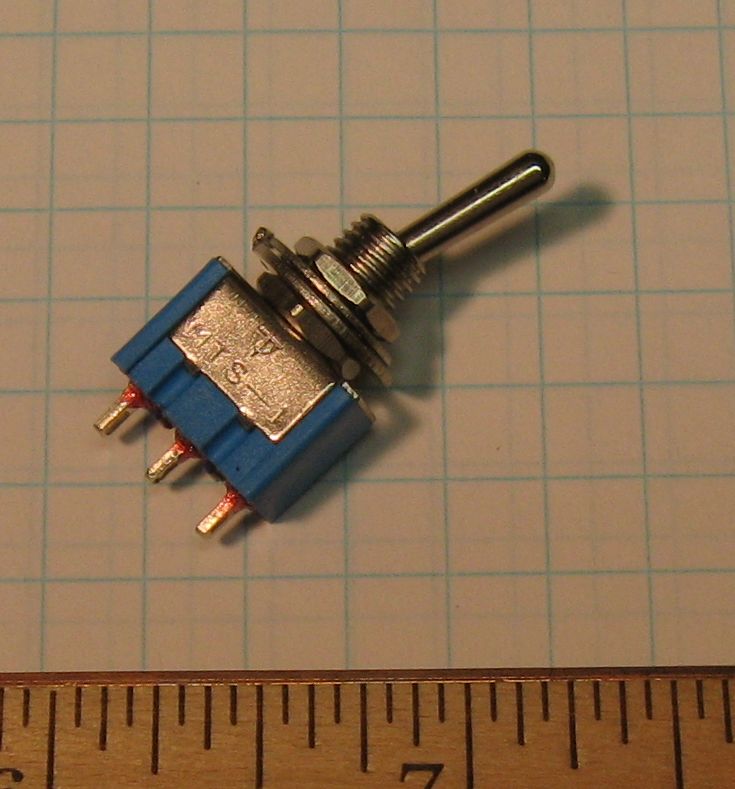
spdt switch.jpg
description
|
|
|
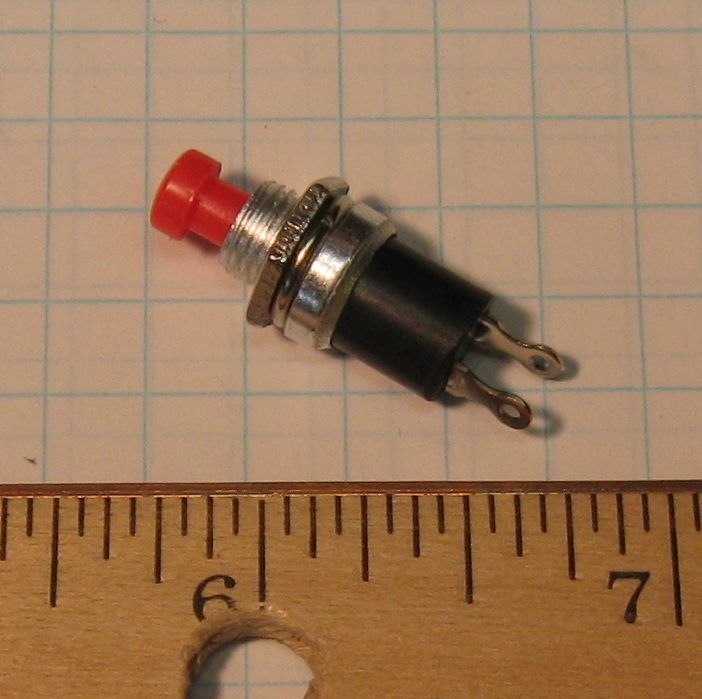
spst normally open push button.jpg
description
|
|
|
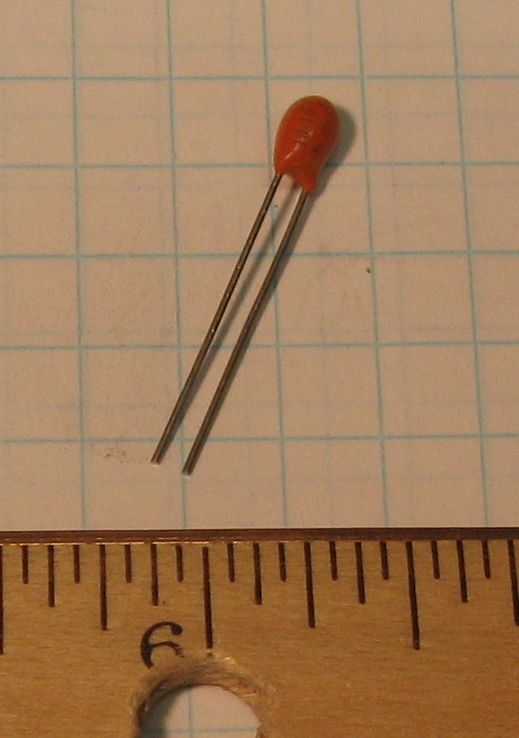
tantalum cap.jpg
description
|
|
|
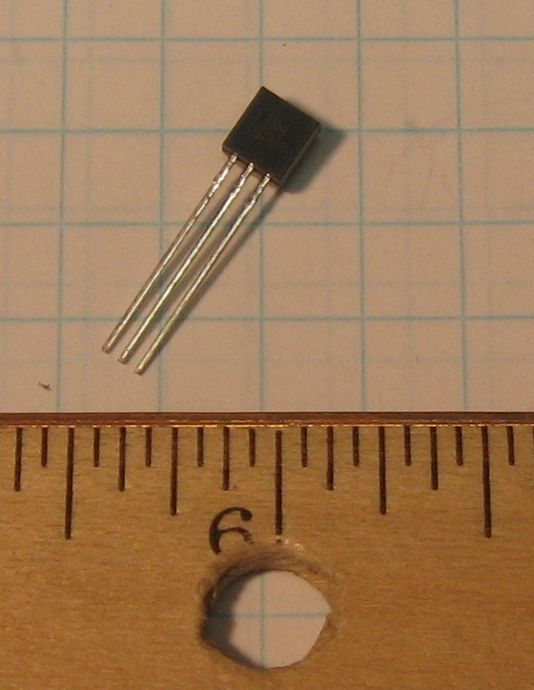
transistor t092 package.jpg
description
|
|